PORG Analysis Center
Predicted GNSS Clock and Orbit products for PPP, designed to reduce reliance on continuous real-time correction streams.
R Typical 24-Hour Prediction Performance:
- Clock agreement : ~0.5 ns STD
- Radial Orbit agreement: ~5 cm RMS
- Availability: 100% (no missing epochs)
- Epoch Interval: Configurable down to 1 sec
- Available in SP3 and RINEX CLK format
- ~55 PRN GPS and Galileo PPP quality subset
High-Accuracy GNSS Orbit and Clock Predictions for PPP Workflows
Independent PPP testing has demonstrated stable rapid PPP solutions using PORG SP3/CLK products.
- 100% data availability — no missing epochs, reduced dependence on continuous real-time correction streams
- Immediate precise-state availability — no dependency on correction-stream startup
- Flexible temporal resolution — configurable down to 1 sec
- Precomputed SP3 and RINEX CLK products — available prior to first prediction epoch
High-accuracy GNSS clock and orbit predictions for PPP workflows.
This approach reduces reliance on continuous real-time correction streams by providing precomputed SP3/CLK products with full data availability and reduced dependence on continuous correction-stream connectivity. Designed for applications where consistency, availability, and deployment simplicity are critical.
Performance metrics shown are based on comparison against RTS and precise reference products using published PORG PRNs.
Request today’s dataset to evaluate performance in your own workflow.
Analysis
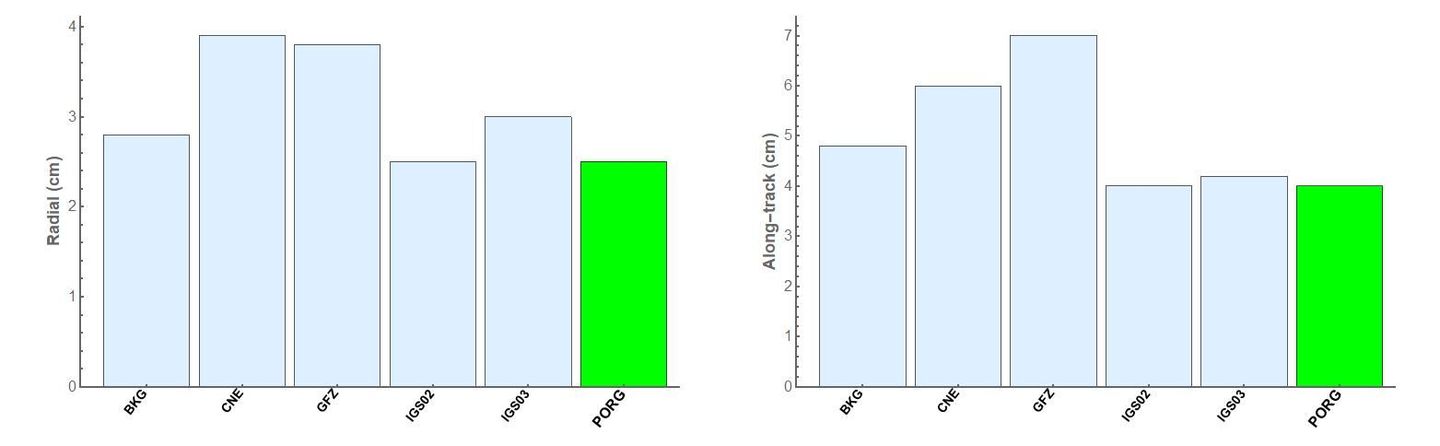
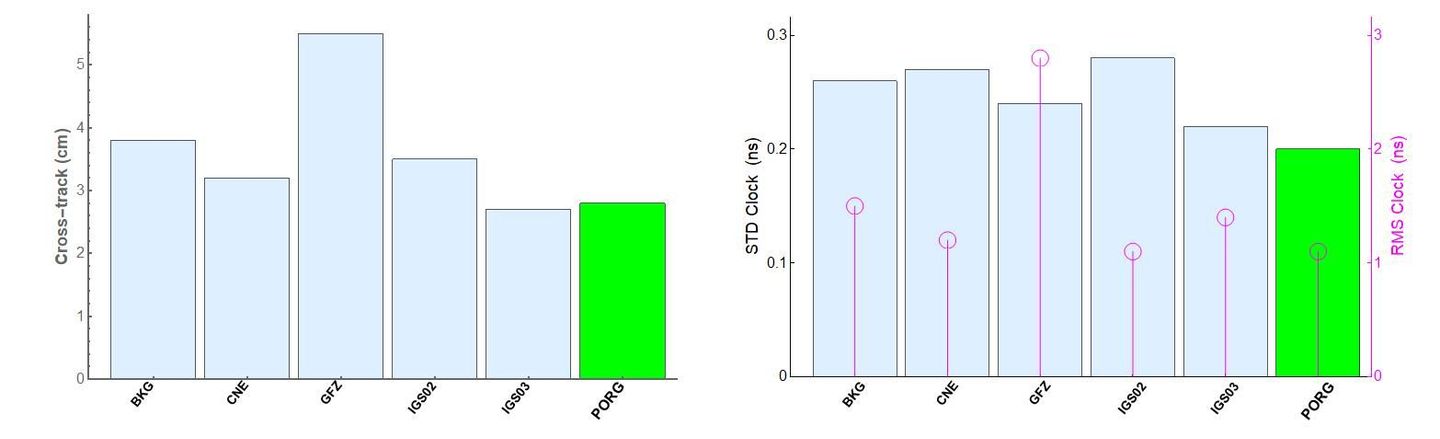
*Representative comparison of PORG predicted products against RTS and precise reference solutions.
Latest News:
PORG Selected for Oral Presentation at ESA GNSS 2026
We are pleased to announce that PORG has been selected for an oral presentation at the 10th International Colloquium on Scientific and Fundamental Aspects of GNSS, organised by the European Space Agency (ESA).
The conference will take place in Montréal, Canada, from 7–9 October 2026, bringing together leading researchers, industry experts and organisations working in satellite navigation, precise positioning and fundamental aspects of Global Navigation Satellite Systems (GNSS).
The accepted presentation is entitled:
Predicted GNSS Orbit and Clock Products for Reduced Dependence on Continuous Real-Time PPP Correction Streams
The presentation will describe the development of the PORG operational forward-prediction service, including high-accuracy GNSS satellite clock and orbit products published before the first prediction epoch, enabling Precise Point Positioning (PPP) workflows with reduced dependence on continuous real-time correction streams.
Since submission of the abstract, the operational service has continued to evolve and now provides GPS and Galileo support for approximately 55 satellites, with 5-second SP3 and RINEX CLK products, a 24-hour prediction horizon, and twice-daily operational publication cycles.
We look forward to presenting the latest developments in PORG and engaging with the international GNSS research community at the 10th International Colloquium on Scientific and Fundamental Aspects of GNSS.